Lest We Forget
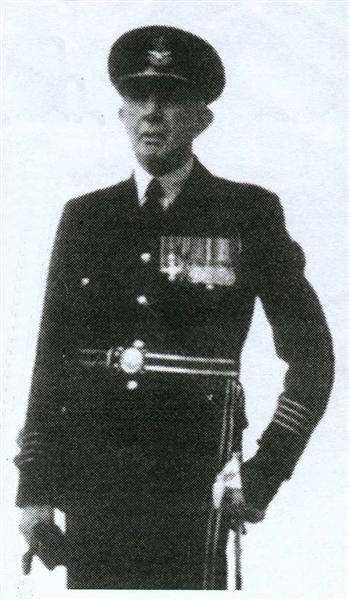
Air Commodore Ian (Rusty) Yeaman, OBE (Ret’d) Born: 9 September 1906 – Died: 18 August 1999 RAAF Service: 29 September 1924 – 9 September 1963 (38 years 11 months) (A short history of the life and times of Rusty) Ian Yeaman was born in Yea, Victoria on 9 September 1906. his father was a Presbyterian minister, from a humble farming background, his mother, a former Macpherson, came from a well-to-do Melbourne family. With a sister and two brothers the family lived in a form of genteel poverty in country parishes. Nevertheless Ian was able to complete his education at Scotch College. At the age of 18 Ian joined the infant and élite RAAF in September 1924 getting the nickname ‘Rusty’ which stuck all through his life. He was in Bowen with 101 Flight, a seaplane survey flight, charting the Barrier Reef when he met his future wife, Florence Mooney, a nurse there in 1927. Serving at Victoria Barracks in Melbourne he entered the 1930’s depression with a reduction in Service salaries and a baby. Ian’s accountancy studies, as a Sergeant, were rewarded with a commission in the Equipment Branch as Pilot Officer in 1935. He was posted to the RAAF station at Richmond, then an all biplane operation, with Hawker Demons, Westland Wapitis and the last of the Bristol Bulldogs. Ian was selected to be the first Equipment Officer at the new Western Australia base at Pearce in 1938, responsible for base supply, catering, accountancy, fuel and movements, supporting Nos 14 and 23 (Later 25) squadrons. He co-commanded the troop train transporting most of the personnel, with Flying Officer Colin Hannah. His wife and son travelled with the train. The family moved into a married quarter at the base, but enjoyed a social life in Perth and discovered the delights of Swan Valley vineyards. Professionally, this was an important time for Ian, now a Flight Lieutenant, with unusual responsibilities because of the distance from Air Force Headquarters. He imported 100 octane fuel, Australia’s first, for use by RAF Vickers Wellesley long-range aircraft flown to Pearce from Darwin, after a record long-distance flight from Ismalia in Egypt. When a Wellesley crashed and had to be sent back to Singapore, RAF Seletar asked for it to be crated in Jarrah timber for personal furniture making. When war came in 1939, he was involved in major works developments, sat on a Commonwealth District Contracts Board, recruiting boards and had to buy and requisition vehicles and machine tools locally, in a dramatic surge of military activity in Western Australia, now seen to be isolated and vulnerable. Later in 1940 he was recalled to Melbourne, prior to going overseas. In 1941 he went to the USA as a Squadron Leader, on a purchasing mission entering from Canada. Because America was neutral the team worked in and from New York nominally as civilians, until Pearl Harbour, when he moved to Washington as a Wing Commander. Aircraft and engine procurement was of top priority, particularly Catalina, Dakota, Vengeance and Liberator systems but the first RAAF accounting machines and forklift trucks were also dealt with. Arranging shipping and ferry flights and visits to production factories and US bases were also part of the job. However, there were many frustrations and with higher level and political pressures influencing Australia’s supplies. After three years away he was home to Melbourne briefly before moving to Brisbane at Forward Echelon HQ in the Commonwealth Bank building in Adelaide Street. As a Wing Commander, a major part of his primary task was liaison with the USAF so he was frequently away, flying to RAAF and USAF airfields in New Guinea and later Dutch East Indies, Borneo and Philippines. He established strong personal relationships with the senior US staff. At war’s end, he commanded No. 3 and later No. 7 Stores Depots at Breakfast Creek and Cannon Hill in Brisbane, which also owned a wide inventory of barracks, wartime huts, on various inner suburban park sites, including Lang Park. Accommodation-hungry squatter groups attacked several of these, confronting Servicemen guards to occupy them. Ian was successful in personally calming several incidents. In 1946 he was sent as Senior Equipment Officer with the British Commonwealth Occupation Forces in Japan. On return, he commanded No. 7 Stores Depot Toowoomba and had a married quarter, for the family to be together. He next commanded No. 2 Stores Depot at Regents Park and Bankstown, Sydney. He was appointed an honorary aide-de-camp to the Governor-General, the first non-GI officer so appointed. He always thought it to be due to Prime Minister Chifley’s intervention as a reward for his handling of the squatter confrontations in Brisbane. He was sent on exchange with the RAF at Headquarters Bomber Command High Wycombe, Buckinghamshire, UK, sailing in 1949 with Florence. In 1950 Florence was diagnosed with Multiple Sclerosis, and they were repatriated to Melbourne. His wife’s disease limited Ian’s Service mobility. Henceforth his postings were all in Melbourne, with some visits and inspections interstate and overseas. He was variously at Maintenance Command, Support Command, was Director of Equipment Policy and Administration at Department of Air, then in Melbourne, and twice commanded No. 1 SD at Tottenham, thus having commanded Nos 1,2,3, and 7 Depots. During that time he rose to Group Captain and was awarded the OBE and Coronation Medal. He retired on 9 September 1963 as an Air Commodore – acknowledged as the longest serving member of the RAAF. He retired in Melbourne, but his wife’s continuing declining in health dictated a move to Caloundra in 1970. He cared for her until her death in 1989. Diagnosed with Parkinson’s Disease, he moved into a hostel in 1995. However, he continued to enjoy life and had made one of his regular visits to his, also now retired former RAAF officer, son and family in Canberra only three months before his death in Caloundra. ***** E&OE Kevin Bunce